

How to choose the best AI tool is one of the most important questions in today’s digital world, where artificial intelligence is rapidly transforming how we work, create, and grow businesses. From content creation and digital marketing to automation and data analysis, AI tools are now part of everyday workflows. As a result, many people are actively searching for how to choose the best AI tool that truly fits their needs.
Understanding how to choose the best AI tool is no longer optional. With thousands of AI platforms available, choosing the wrong one can feel confusing, overwhelming, and expensive. This is why learning how to choose the best AI tool correctly is critical for individuals, startups, and enterprises alike. Instead of chasing trends, users must focus on real value and practical outcomes.
Many users believe that how to choose the best AI tool simply means picking the most popular or most advertised option. In reality, how to choose the best AI tool depends on factors such as goals, budget, workflow compatibility, and long-term scalability. Ignoring these factors often leads to wasted money, poor performance, and low adoption.
Whether you are a beginner, freelancer, startup owner, or business professional, knowing how to choose the best AI tool can help you save time, boost productivity, and improve decision-making. The right approach to how to choose the best AI tool allows you to automate repetitive tasks, enhance accuracy, and gain a competitive edge in your industry.
In this complete guide, we will explain how to choose the best AI tool step by step. You will learn how to choose the best AI tool by evaluating features, pricing, security, usability, and real-world use cases. By the end of this article, you will have a clear and practical framework for how to choose the best AI tool that delivers real value—not hype.
Why Choosing the Right AI Tool Matters
AI tools can:
- Save time and operational costs
- Increase accuracy and consistency
- Improve decision-making
- Scale human effort
- Create competitive advantages
At the same time, choosing the wrong AI tool can result in:
- Wasted budget
- Data security risks
- Poor adoption by teams
- Limited ROI
- Vendor lock-in
That is why how to choose the best AI tool should be treated as a strategic business decision—not a casual software purchase.
Step 1: Clearly Define Your Problem Before Looking at AI Tools
The most common mistake people make is starting with tools instead of problems.
Before evaluating any AI solution, answer these questions clearly:
- What specific task or workflow do I want to improve?
- Is this problem repetitive, data-driven, or time-consuming?
- What does success look like after using AI?
- Who will use the tool daily?
Example:
Instead of saying, “I need an AI tool,” say:
“I need an AI tool that reduces content creation time by 50% without lowering quality.”
Clear problem definition narrows your options immediately and prevents unnecessary spending.
Step 2: Identify the Type of AI Tool You Actually Need
AI tools fall into different functional categories. Understanding these categories helps you avoid choosing an overpowered or irrelevant solution.
Common AI Tool Categories
- Content & Writing AI – blog writing, copywriting, SEO assistance
- Design & Creative AI – image generation, video creation, branding
- Marketing & Sales AI – ad optimization, email automation, lead scoring
- Customer Support AI – chatbots, ticket routing, sentiment analysis
- Data & Analytics AI – forecasting, insights, anomaly detection
- Development AI – code generation, debugging, testing
- Productivity AI – scheduling, summarization, workflow automation
Knowing which category your problem belongs to is essential when learning how to choose the best AI tool.
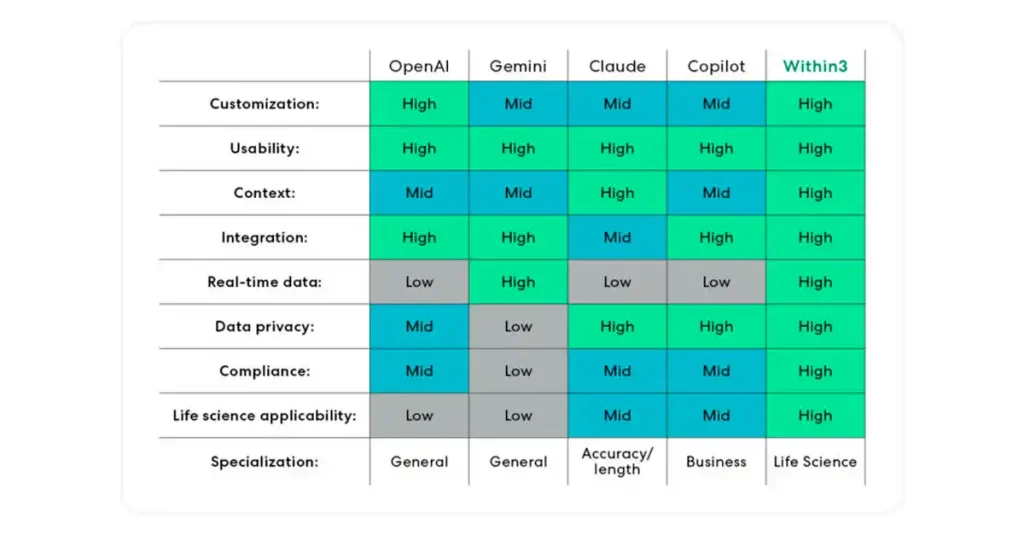
Step 3: Evaluate Core Features That Actually Matter
Not all features are equally important. Many AI tools advertise long feature lists that look impressive but offer little practical value.
Focus on These Core Features
1. Accuracy and Output Quality
The tool should consistently produce reliable, relevant, and usable results. Test real-world scenarios, not demo examples.
2. Customization and Control
Can you customize prompts, rules, tone, workflows, or models? Tools with flexibility adapt better to evolving needs.
3. Ease of Use
A powerful AI tool that users cannot easily operate will fail. Intuitive UI and minimal learning curves are critical.
4. Integration Capabilities
Check if the tool integrates with your existing software stack such as CRM systems, CMS platforms, or analytics tools.
5. Scalability
Can the tool handle growth in usage, data volume, or team size without significant cost jumps?
Step 4: Compare Pricing Models and Total Cost of Ownership
Understanding pricing is a crucial part of how to choose the best AI tool.
Common AI Pricing Structures
- Subscription-based (monthly or yearly)
- Usage-based (per request, token, or credit)
- Tiered plans (basic, pro, enterprise)
- Custom enterprise pricing
Look Beyond the Sticker Price
Consider:
- Onboarding costs
- Training time
- Add-on fees
- API usage limits
- Cost per outcome, not cost per tool
The cheapest tool is rarely the most cost-effective in the long run.
Step 5: Assess Data Privacy, Security, and Compliance
AI tools often process sensitive data. Ignoring security considerations can create serious legal and reputational risks.
Key Questions to Ask
- Is your data stored, shared, or used for model training?
- Does the tool comply with relevant data protection standards?
- Can you delete your data permanently?
- Are there role-based access controls?
If you operate in regulated industries, this step is non-negotiable.
Step 6: Test With Real Use Cases Before Committing
Free trials, demos, or pilot programs are essential.
How to Test Effectively
- Use real data and workflows
- Measure time saved and output quality
- Involve actual end users
- Compare results against manual processes
- Track learning curve and adoption rate
Avoid testing only “best-case” scenarios. Stress-test the tool where it matters most.
Step 7: Evaluate Vendor Reliability and Long-Term Viability
AI tools evolve rapidly, but not all vendors survive long-term.
Indicators of a Reliable AI Provider
- Regular updates and feature improvements
- Clear product roadmap
- Transparent communication
- Active customer support
- Strong documentation and onboarding
Choosing a disappearing vendor can disrupt your operations significantly.
Step 8: Understand the Limitations of AI Tools
Knowing how to choose the best AI tool also means understanding what AI cannot do.
AI tools:
- Do not replace human judgment
- Can produce biased or incorrect outputs
- Require oversight and validation
- Depend heavily on input quality
Successful AI adoption blends automation with human expertise.
Step 9: Match the Tool to Your Skill Level and Team Readiness
The best AI tool for a data scientist may be unusable for a small business owner.
Ask:
- Do users need technical expertise?
- Is training required?
- Is support available when issues arise?
A slightly less advanced tool that your team actually uses will outperform a complex tool that sits idle.
Step 10: Create a Decision Framework for AI Tool Selection
To simplify decision-making, use a scoring framework:
Sample Evaluation Criteria
- Problem fit (30%)
- Output quality (20%)
- Ease of use (15%)
- Integration (15%)
- Cost efficiency (10%)
- Security & compliance (10%)
Score each shortlisted AI tool objectively. This removes emotion and marketing influence from the process.
Common Mistakes to Avoid When Choosing AI Tools
- Chasing trends instead of needs
- Overpaying for unused features
- Ignoring long-term scalability
- Skipping security reviews
- Not involving end users
- Expecting AI to work without guidance
Avoiding these mistakes significantly increases your chances of success.
Future-Proofing Your AI Tool Choice
AI is evolving quickly. Choose tools that:
- Offer frequent updates
- Support customization
- Provide export options
- Avoid heavy vendor lock-in
Flexibility today ensures relevance tomorrow.
Final Thoughts: How to Choose the Best AI Tool With Confidence
How to choose the best AI tool is not about finding the most popular or most expensive solution. It is about finding the right balance between functionality, usability, cost, and strategic alignment.
When you:
- Define your problem clearly
- Evaluate tools objectively
- Test before committing
- Consider long-term implications
You transform AI from a risky experiment into a powerful competitive advantage.
AI is not magic—but the right AI tool, chosen wisely, can fundamentally change how you work, scale, and succeed.