

Welcome to 2026, where the digital landscape has undergone a monumental shift. We have moved beyond the era of passive chatbots into the revolutionary world of Agentic AI.
Unlike the static AI models of the past that simply answered questions, Agentic AI represents a new breed of autonomous systems capable of reasoning, planning, and executing complex tasks without constant human intervention. From managing global supply chains to orchestrating personal finances, these “AI agents” are no longer just assistants—they are active executors in our digital economy.
In 2026, we have moved past simple chatbots. We are now in the era of Agentic AI—autonomous systems that don’t just talk, but execute tasks, manage finances, and handle sensitive data on our behalf. However, as AI agents become more independent, the security risks have reached an all-time high.
How do we know if an AI agent is actually authorized by the user? How do we stop voice-cloning fraud? This is where industry leaders like Pindrop and Anonybit become the backbone of the new AI economy.
Table of Contents
1. The Rise of Agentic AI and the Identity Crisis
Agentic AI refers to AI systems that act as “agents.” They can book your flights, negotiate business contracts, and access your bank accounts. But this autonomy creates a massive security loophole: Identity Spoofing.
If a malicious actor clones your voice or steals your digital persona, they can command an AI agent to perform unauthorized transactions. In 2026, “Identity” is the new perimeter, and traditional passwords are no longer enough.
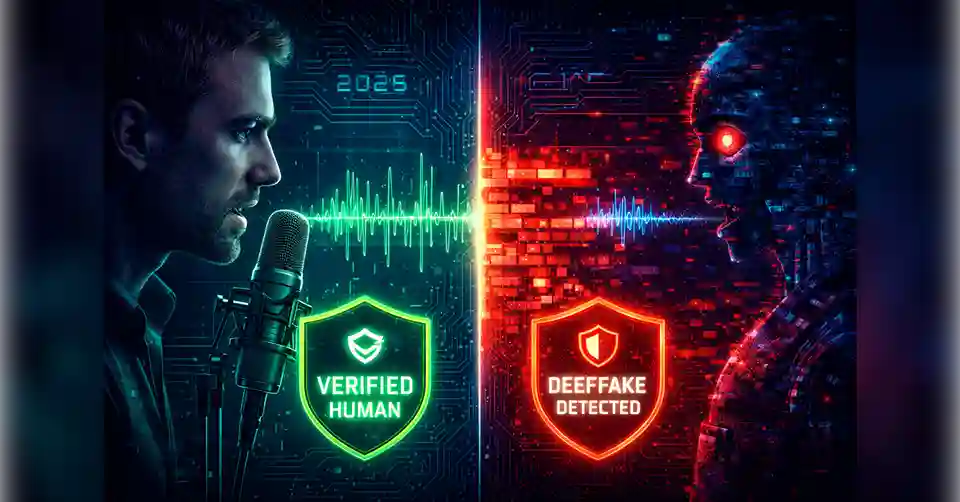
2. Pindrop: Defeating the Threat of Voice Deepfakes
As Agentic AI relies heavily on voice commands (through Gemini Live or other voice-first interfaces), voice-cloning has become a primary tool for hackers.
Pindrop has emerged as the gold standard for Deepfake Voice Defense. By analyzing the “liveness” of a voice and detecting synthetic artifacts that the human ear cannot hear, Pindrop ensures that:
- Only the real human owner can trigger high-value actions.
- AI-generated voice clones are blocked in real-time.
- The “Call-to-Agent” pathway remains secure from social engineering.
3. Anonybit: Securing the Biometric Backbone
If Pindrop is the “ears” of security, Anonybit is the “vault.” Traditional biometric databases are honeypots for hackers. If a hacker steals your face or fingerprint data, your Agentic AI ecosystem is compromised forever.
Anonybit solves this through Decentralized Biometrics. Instead of storing your biometric data in one place, it breaks the data into “bits” and distributes them across a decentralized network.
- Zero-Knowledge Proofs: Anonybit verifies the user’s identity without ever storing the actual biometric image.
- Eliminating Data Breaches: Since there is no central database, there is nothing for hackers to steal.
- Seamless Integration: AI agents can verify a user’s identity instantly through Anonybit’s decentralized cloud.
4. Preventing Autonomous Agent Fraud
The combination of Agentic AI, Pindrop, and Anonybit creates a “Zero-Trust” environment. In 2026, the best security strategy for any business involves three layers:
- Detection: Using Pindrop to identify if the command is coming from a human or a deepfake.
- Verification: Using Anonybit to ensure the person’s identity is verified via decentralized biometrics.
- Execution: Allowing the Agentic AI to perform the task only after both layers are cleared.
Conclusion: A Secure AI Future
The potential of Agentic AI is limitless, but its success depends entirely on trust. Technologies like Pindrop’s deepfake detection and Anonybit’s decentralized identity management are not just “add-ons”—they are the foundation of a safe, autonomous world in 2026.
As you integrate AI into your daily life or business, prioritize security tools that are built for the age of autonomy.